
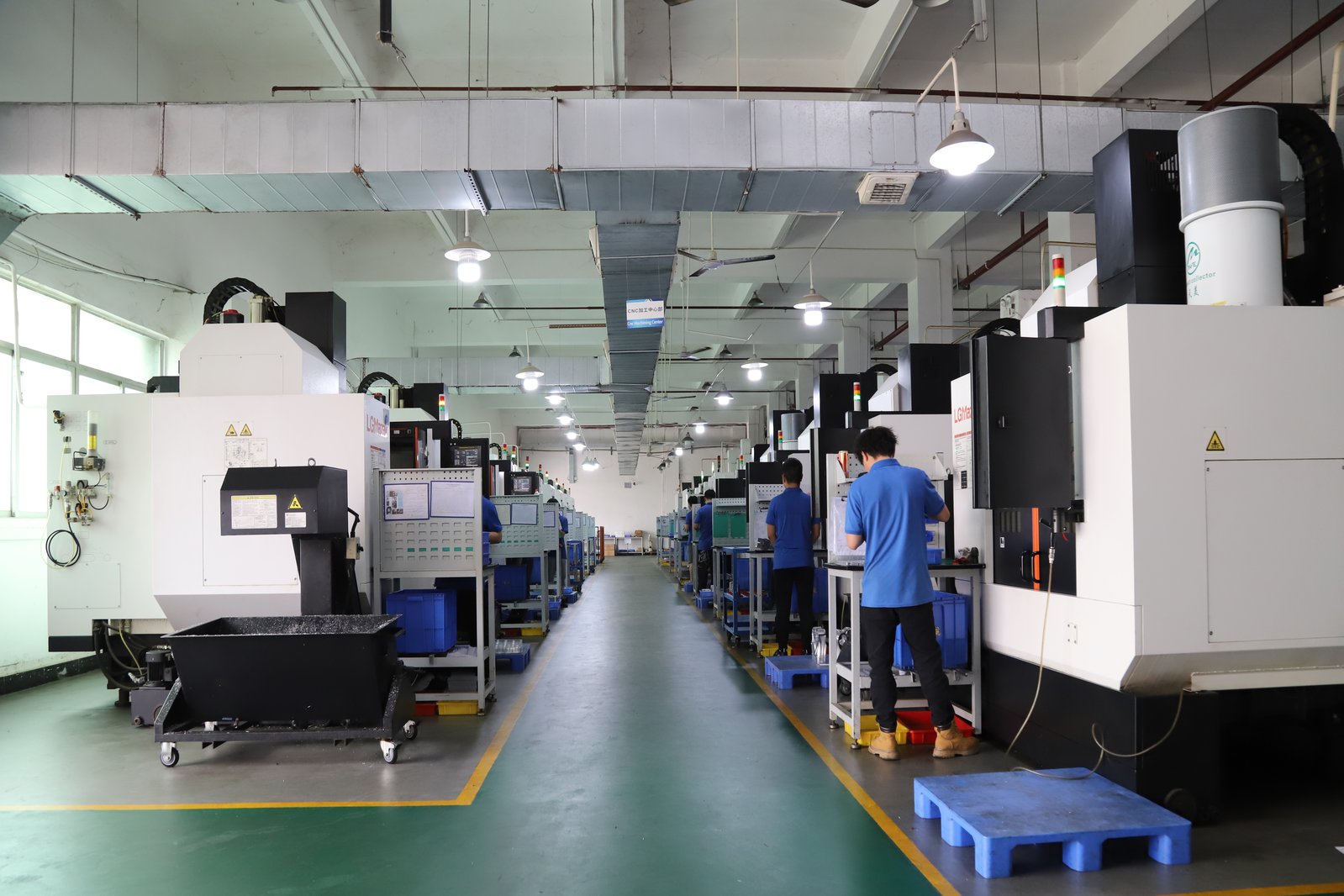
Sourcing aerospace metal parts from China is less a machining question than a verification question. Every competent shop can cut the geometry; what separates a usable supplier is whether the alloy can be proven, the tolerances held across the run, and the records assembled in a form your auditors accept. This guide walks through the three specifications that decide whether your parts pass — the material callout on the drawing, the tolerance band on the critical features, and the documentation scope in the purchase order — and how to check a supplier against each before the first part ships.
Why does aerospace sourcing turn on verifiability rather than machining skill?
Aerospace parts punish a wrong assumption differently from commercial parts: the part flies, the load repeats, and a substituted alloy or an out-of-tolerance feature becomes a liability rather than a rework. So the buying standard shifts from "can you make this?" to "how do you prove you made it correctly?" Every other decision — supplier selection, order structure, inspection scope — follows from that shift.
Verifiability has three legs. Material: the alloy and temper on the drawing must match the certificate on the lot in the machine, with a check that catches the difference. Process: the tolerance must be proven across the run, not just on a lucky first piece, which is what SPC and a capability number demonstrate. Documentation: the reports must let an engineer who was not in the room confirm the part months later. A supplier that treats all three as routine is rare, and the way to find it is to specify all three in the RFQ and read what comes back.
That specification habit applies to any China metal-parts order, and the wider sourcing framework — entity checks, sample orders, total-cost comparison — is covered in the supplier selection guide. Aerospace simply raises the evidence bar on the same process.
Which alloys should your aerospace drawing specify?
Aerospace machining concentrates on a short list of alloys, and the drawing should name the grade and specification exactly — not "aluminum," but "7075-T6 per AMS-QQ-A-250/12" — because the certificate is matched to that callout. Prototype and production should use the identical alloy: testing a 7075 part in 6061 tells you nothing about the real part's strength.
| Alloy | Where it is used | Why it tests a supplier |
|---|---|---|
| 6061-T6 aluminum | Brackets, housings, covers, non-structural parts | Baseline; easy to cut, so it tests process discipline |
| 7075-T6 aluminum | Structural fittings where strength-to-weight matters | Residual stress and thin-wall deflection demand solid fixturing |
| 17-4PH stainless | Structural and actuator components | Machined soft, heat-treated, then finished — tests scheduling and distortion control |
| Ti-6Al-4V | Weight-critical and elevated-temperature zones | Slow cutting, heat-sensitive, expensive — tests toolpath strategy |
| Inconel 718 | Engine and high-temperature components | Work-hardens — tests real experience versus ambition |
Ask which of these a supplier machines in-house and which would be a first. The exotic alloys expose tooling strategy and inspection discipline that aluminum never will, and the honest answer shapes the risk on the quote. The full material range available from this kind of shop is listed on the metal parts services overview.
What tolerance strategy should an aerospace drawing use?
Aerospace prints are dense with tight callouts, but tightness has a realistic production floor. On milled and turned features, production capability sits at ±0.003 mm; where the part needs a sealing, seating, or bearing surface, precision grinding reaches ±0.002 mm. Process capability on key characteristics is tracked at Ppk ≥ 1.67 initial. Numbers inside that envelope are holdable across a run; numbers beyond it belong to a different process, and the quote should say so rather than silently hoping.
The buyer trap on aerospace prints is over-tolerancing everything. Every feature pulled to the tight end of the envelope adds finishing passes and inspection time, and on a low-volume program that cost is not amortized. Put the tight band where the part mates, seals, or carries load; let the rest ride the general block. A supplier that returns DFM feedback on which callouts cost money without adding function is doing the engineering; one that quotes the drawing without comment is not.
Then verify the run, not just the first article. A CMM report on the first piece proves the setup was right that day; SPC data across the lot proves the process stayed in control. Ask for both, and check that the capability claim is attached to measured data rather than to a promise. What that data looks like in practice is explained in the quality and inspection guide.
What documentation should the purchase order require?
Documentation is the product on aerospace work — the reports are what your quality department signs, what your auditor reviews, and what protects you if a lot is questioned. Build the documentation scope into the purchase order so it is priced and scheduled, not requested after machining:
- Material certificates naming the alloy, temper, heat number, and the specification on the drawing.
- Incoming verification records proving the lot was checked against the certificate before cutting.
- CMM dimensional reports measured against the drawing's datum scheme, on the critical features.
- SPC data on key characteristics backing the capability claim with numbers across the run.
- First-article report signed off before production volume is released.
- Special-process records for heat treatment, anodizing, passivation, or plating.
Each document moves work off your incoming inspection and onto the supplier, where it belongs. The documents that ship with parts from a build-to-print machining shop, and how the reporting is produced, are detailed on the documentation and reporting page.
How is material identity verified on an aerospace lot?
Traceability is a chain, and it only holds if every link exists. The chain runs: the mill certificate arrives with the raw material; the incoming check verifies the lot against that certificate — XRF spectroscopy is the standard method and catches a substituted or mixed alloy at the receiving dock; the production record ties finished parts to the lot; and the reports ship with the order.
Ask how the shop logs the chain. A supplier that records material source and usage, machine data, batch, and operator against each lot can isolate a non-conformance to a specific batch and show you the record during an audit. One that answers "we keep the paperwork in a folder" does not have usable traceability. For aerospace parts, the distinction is not administrative — it decides whether a problem is a single lot or a fleet-wide question.
Quality management structure supports the chain. A build-to-print shop certified to ISO 9001:2015, IATF 16949:2016 and ISO 14001:2015 operates under audited document control, and the IATF scope, like the ISO system beneath it, treats the manufacturer as a build-to-print supplier — the model most aerospace buyers use when sending released drawings. The certificate verification step, with numbers checked against the registrar, belongs in your supplier screen before any order.
Which quality system should the supplier actually hold?
Match the certificate to the program requirement rather than collecting the most impressive list. ISO 9001:2015 is the general quality baseline and covers most build-to-print work; IATF 16949:2016 signals automotive-grade process discipline and is frequently the stronger system in practice; ISO 14001:2015 covers environmental management. If your contract demands AS9100 or another aviation standard, only a supplier holding it will pass your audit, and that should be settled before drawings move.
Verify the numbers, not the logos. Every certificate carries a registrar reference, and a check with the registrar confirms the certificate is current, in the right legal name, and scoped to what the supplier claims. A certificate whose scope excludes product design tells you the shop is build-to-print, which for released aerospace drawings is exactly the model you want. Read the scope line as carefully as the logo.
Certificate checks are one layer of a supplier screen that also covers the legal entity, a sample order, and a live floor walk-through. The full sequence, run in order, is laid out in the metal parts sourcing FAQs, and it applies to any China machining supplier, aerospace or not.
How do you keep quality consistent from prototype to production?
The prototype only pays off when its approval carries into the production run, and the transfer is cleanest when the same shop makes both. The fixture, the program, and the prove-out that produced the approved prototype are the expensive knowledge; a second supplier re-learns all of it, and the part is effectively re-qualified from scratch. When prototyping and production share machines and programs, the approved geometry is repeated rather than re-derived.
Structure the release in stages. Approve the prototype's material file and dimensional report, then release a pilot batch that carries its own first-article report and, on critical features, SPC data across the run. The prototype proved the design; the pilot proves the process is repeatable at volume. Skipping either stage moves the risk downstream, where it is more expensive to fix.
Keep the documentation standard identical across both stages. If your quality system needs certificates and reports on the prototype, it needs the same on every production lot, and building the habit at prototype stage means production is not a paperwork surprise. The production capability behind that promise — the machines and inspection equipment the run will actually use — is described in the factory overview.
How do you verify a China aerospace supplier before the order?
The verification sequence that protects an aerospace program is the same one that protects any China metal-parts buy, run to a higher standard. Four layers, in order of cost:
- Entity and certificate check. Confirm the legal entity matches across quote, certificates, and contract, and verify the certificate numbers with the registrar.
- Capability check. Confirm the alloy list, tolerance envelope, and documentation scope against your part, using a non-proprietary example if possible.
- Sample order. Order a part on a non-sensitive design and read its dimensional report yourself. The sample exercises the whole chain — material, machining, inspection, shipping — with a drawing you can afford to share.
- Live walk-through. Run a live video tour aimed at a machine cutting your kind of material. A factory can show a running spindle; a broker cannot produce a floor it does not own.
Only after those layers pass should the production drawing and model go out. Each layer is cheap; the failure they prevent — a proprietary aerospace design sitting with an unqualified supplier — is not. When the entity, the certificates, and the sample all check out, the parts can be expected to follow.
What are realistic timelines and order structures for aerospace parts?
Aerospace orders run on two rhythms. Prototypes and first articles are urgent and small: with a 1-piece MOQ, you can machine a single part, review its material file and dimensional report, and freeze the design before committing volume. Production orders are larger and slower, gated by first-article approval and carrying per-lot inspection and documentation.
On the calendar, simple machined parts typically ship in roughly a week, while parts with many operations, exotic alloys, or surface finishing run three to six weeks once inspection and documentation are included. The shipping leg is separate again: fly prototypes so the design loop is measured in days, let production quantities ride ocean freight, and book logistics in parallel with machining rather than after it. The total-cost logic behind that split — what freight does to a per-part number at different volumes — is worked through in the parts and ordering guide.
Frequently Asked Questions
Which alloys matter most for aerospace metal parts?
The core set is 6061-T6 and 7075-T6 aluminum for airframe brackets and housings, 17-4PH stainless for structural and actuator parts, Ti-6Al-4V for weight-critical and hot zones, and nickel alloys such as Inconel for engine temperatures. The alloy on the prototype and the production part should be identical, because the drawing and the certificate both key off it.
What tolerances should an aerospace drawing carry?
Put the tight band where the part functions — mating faces, bearing seats, sealing surfaces — and keep the rest on a sensible general tolerance. Production capability on milled and turned features is ±0.003 mm, with ±0.002 mm reachable by precision grinding, and process capability of Ppk ≥ 1.67 at the initial study on key characteristics and Cpk ≥ 1.33 on general characteristics. Capability is reported per characteristic: every report names the feature, its tolerance band, the sample size, the sigma method, and the study window is the standard to quote and verify.
What documentation should I demand on aerospace parts?
At minimum the material certificate and a dimensional report on critical features. For a part going into a flight program, add incoming verification records, SPC data on key characteristics, and a first-article report. The reports are what your quality system signs off, so scope them into the quote rather than requesting them later.
How is the material on an aerospace part verified?
Every incoming lot is checked against its mill certificate before cutting — XRF spectroscopy is the standard method and catches a mixed or substituted alloy at the receiving stage. The certificate travels with the finished parts, giving a chain of evidence from the mill to the component. Ask how the shop handles that check before you order.
Does a China machining supplier need AS9100 for aerospace work?
Only if your contract demands it. Prime contractors and many tier suppliers require AS9100 from their machine shops, and where the purchase order says so, an AS9100 holder is mandatory. For build-to-print work without that requirement, a supplier certified to ISO 9001:2015, IATF 16949:2016 and ISO 14001:2015 provides the audited structure the documentation runs on. Match the quality system to the requirement.
Can I audit a China machining supplier remotely before ordering?
Yes, in layers: verify the legal entity and certificate numbers with the registrar, order a sample part on a non-sensitive design and read its report, then run a live video walk-through of the shop. Proprietary drawings should go out only after those checks pass.
What are realistic lead times for aerospace prototype parts?
Simple machined parts can ship in roughly a week; complex parts with many operations, exotic alloys, or finishing commonly need three to six weeks including inspection and documentation. The shipping leg is separate — fly prototypes while production quantities ride ocean freight.
How do I keep quality consistent from prototype to production?
Release in stages: approve the prototype's material file and dimensional report, then run a pilot batch carrying its own first-article report and SPC data on key characteristics. When the same machines and programs produce both prototype and production parts, the approved geometry is repeated rather than re-derived.
Have an aerospace drawing to qualify?
Email the model, the toleranced drawing, and the material specification to [email protected] or call +86 13126536955. You will get a DFM review, a documentation scope, and an itemized quote — usually within one business day.