
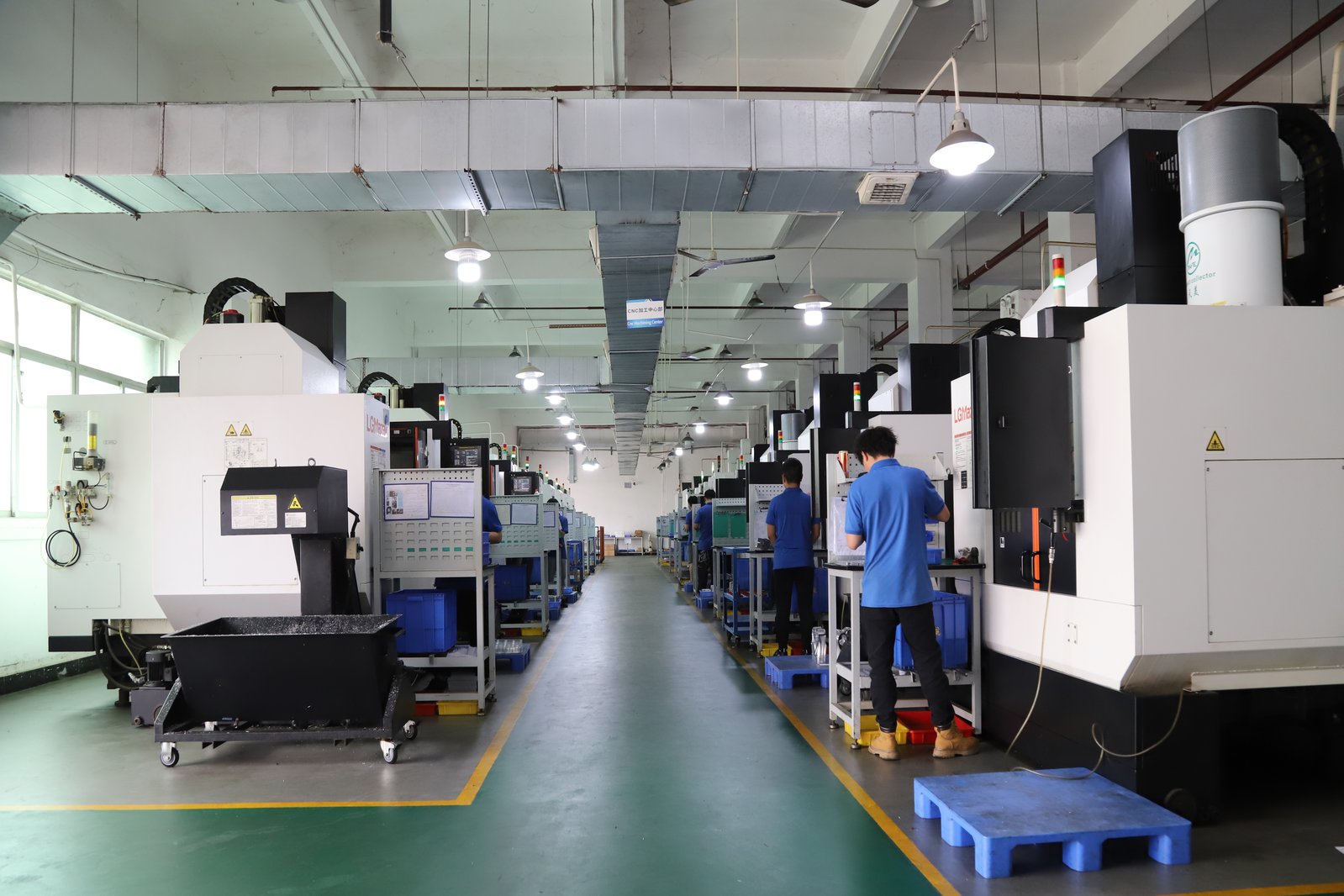
A delivery date from a China metal-parts supplier is rarely one number. It is a chain of smaller schedules - the day the drawing is complete, the day the material is ordered and arrives, the week the job sits in the machine queue, the days each process step takes, the batch cycle at the finisher, and the transit time at the end. Each link has its own clock, and the delivery date is only as honest as the weakest link. Buyers who understand the chain can estimate a realistic date and, more importantly, protect it.
Keep this working rule: with a complete drawing and a common material, a part at prototype quantity should be ready at the factory in roughly one to three weeks in 2026, and a part with several process steps and finishing more like three to six weeks, before transit. The sections below show where those weeks come from, which links the buyer controls, and how to hold a schedule together when a link slips.
1. How much of the lead time happens before the order is even placed?
An uncomfortable share of every lead time is spent before the purchase order exists. The drawing must be complete, the quote must be requested, the suppliers must answer, the quote must be reviewed and approved, and the order must be issued - and every one of those steps is measured in days on your side of the table. A part cannot be scheduled until it is ordered, and it cannot be ordered until the front end is finished.
The fastest lead-time reduction available to most buyers is therefore to compress their own front end. Freeze the drawing before you send it out, not after the first article is cut. Send the identical package to the shortlist at the same time so the comparison happens in parallel. Approve the quote and issue the purchase order the same week you receive the number, and answer the supplier's technical questions the same day they arrive.
Suppliers schedule by order of confirmation, not by order of inquiry. A buyer who confirms fast enters the queue ahead of one who lingers over the same quote for two weeks, and the difference compounds on every reorder. The professional habit is to treat the front end as part of the lead time and run it with the same discipline as the machining itself.
2. What happens between order confirmation and the first cut?
Once the order is confirmed, three things must line up before metal is removed. The material must be secured - from stock if the grade is common, from a distributor or mill if it is not. The job must enter the machine queue, whose depth depends on the week. And the program and fixtures must be prepared, which is quick for a repeat part and slower for a new one. None of these moves on your urgency; they move on their own calendars.
The machine queue is the least visible link and often the longest. A shop with open capacity starts your job within days; a full floor schedules it behind the work already booked, and no amount of expediting moves a machine that is already cutting another customer's order. This is why a committed start date is worth more than a promised ship date - the start date tells you where you actually stand.
Ask the supplier to name both, and ask what is already on the floor ahead of your job. A shop that can say "your material arrives Thursday, your job starts Monday" has a plan. One that offers only a ship date is holding a buffer you will not see until it is used. The honest schedule names the intermediate dates; the optimistic one hides them.
3. When does the material itself add days?
Material sourcing is where schedules quietly slip on metal parts. A part in 6061-T6 plate or 303 stainless bar, in a standard size, is usually cut from stock the shop holds or can get in a day or two. The moment the drawing calls for an unusual plate thickness, a large block, a less common alloy, or certified material with traceability for a governed program, the stock has to be bought in - and the purchase runs on the distributor's calendar, not the machine shop's.
Specialty material typically adds days to a week-plus, and it grows with the size and the alloy. Large plates and non-standard forms come from the mill through the distribution chain, which does not move for a single part. Titanium and the nickel alloys sit at the slow end, because mills produce them in campaign quantities. A material that must arrive with a mill certificate for a controlled program carries its own sourcing lead time on top of the metal's.
Confirm material availability at the quoting stage, not after the order. If the answer is "we order it in," the sourcing lead time is now a line in your schedule. Where the design still allows it, switching to a stocked grade, size, or form is the cheapest schedule insurance a buyer can buy - and it costs nothing on the drawing.
4. How do process steps and geometry stretch the calendar?
The number of process steps is the strongest predictor of a metal part's lead time. A part that is machined complete in one setup on one machine is the fast end of the range. Add a second operation, a heat-treatment step, a grinding pass, or a finishing process, and each step brings its own setup, queue, and hand-off - and each hand-off is a place where days accumulate and datum relationships must be re-established.
Geometry decides how many steps a part needs. Features on multiple faces may force extra setups or a move to a multi-axis machine. Tight tolerances that need grinding add a process family. Deep pockets and thin walls force slow passes that lengthen the machining span. A drawing that concentrates its features into one setup and its tight tolerances into one process is a drawing that ships faster than the same part scattered across operations.
The buyer's lever is to count the steps before quoting. Ask the supplier to list the process route - what happens first, second, third, and where the part goes between operations. A route with fewer steps and fewer hand-offs is a shorter schedule by construction, and asking for the route makes the schedule visible instead of buried in a promise.
5. Where do finishing and outside processes hide days?
Finishing and outside processes are where the calendar surprises live, because they run on their own schedules. Anodizing, plating, and passivation collect parts into batches before a tank runs, so a part that finishes machining on a Monday may wait for the batch to fill. Hard anodize and thickness-verified coatings add verification time on top of the batch wait. And processes sent to outside specialists - plating, heat treatment, specialized coatings - run on the specialist's queue, which the machining supplier does not control.
Heat treatment deserves special attention because it reorders the sequence. A part that must be hardened or aged usually needs rough machining, the treatment step, and then a finishing pass on the critical surfaces. That inserts a queue in the middle of the job rather than at the end, and the calendar absorbs it whether the schedule shows it or not.
Ask at quoting which steps run in-house and which go outside, and ask the outside process for its own lead time. The machining supplier's estimate is only as good as the finisher's promise, and a buyer who knows the outside calendar can plan around it. A finish that is cosmetic carries one schedule; a verified engineering coating carries another, and the drawing should say which one the plan must include.
6. How do prototypes and production runs behave differently?
A prototype and its production follow-on are two schedules sharing one part number, and the difference between them is the approval gate. The prototype runs from order to first article and inspection, because its job is to prove the drawing and the process. The production run then starts from a different place: it needs material for the full quantity, a re-release of the proven setup, and inspection of the whole lot before it ships.
That is why the production date must count from prototype approval, not from the original order date. A supplier that quotes both together schedules the run on the assumption that the prototype is approved as drawn - and every prototype iteration pushes the production date with it. Buyers who merge the two into one promise discover the slip only when the production date arrives and the parts are not there.
Plan an approval gate between them and put it in the schedule. When the prototype clears inspection and the drawing is frozen, the production run starts its own clock with its own material and capacity plan. Sequencing the two as separate milestones keeps each schedule honest, and it gives the buyer a decision point where the design can still change without re-scheduling a production run that has not started.
7. What does the shipping leg add to the total timeline?
Freight is the schedule line buyers misjudge most, because it looks simple and is not. Air freight from southern China reaches most destinations in days when customs is routine. Ocean freight takes weeks, and the voyage is only part of it - port handling, customs clearance, and inland delivery at both ends routinely add more time than the sailing itself. The difference between "ready at factory" and "on your dock" can be measured in weeks.
Match the mode to the purpose. A first article should fly, because the value of closing the design loop in days exceeds the airfreight premium. Repeat production should go by sea on a regular cadence, because the economics are right once inventory covers the transit window. The mistake is using ocean freight for a first article and then waiting weeks to learn the drawing needs a change.
Confirm the Incoterm in the same conversation as the date. Under EXW or FOB the buyer controls the freight and can choose the speed; under DDP the supplier controls it, and the delivery date should state which leg it includes. Ask in writing, because a date that does not say what it covers is a date that will be argued about later.
8. How do you lock a schedule that survives?
A schedule survives when it is built from the chain rather than from a hope. Lay out the links - drawing freeze, material arrival, queue start, process steps, finishing, inspection, freight - and give each a realistic duration with a little slack at the points that have no recovery. Material sourcing can slip and finishing batches can wait; a plan that assumes every link lands on its best day is a plan for lateness.
Protect the schedule with milestones and information. Agree intermediate dates - material ready, first article, process complete, ship date - so a slip surfaces where it happens, while there is still time to act. Give the supplier a forecast for repeat work so material and capacity can be reserved ahead of firm releases. Keep one technical contact on each side so a question raised in Dongguan gets an answer the same day.
Finally, treat the lead time as a shared plan rather than a supplier's promise. The buyers whose parts arrive on the date in the email are the ones who froze their drawings, compressed their own front end, scheduled the prototype and the run as separate gates, and picked the freight mode that matched the purpose. A China metal-parts lead time is not a number a shop gives you; it is a plan both sides execute, and the plan is only as good as the discipline on both ends.
Frequently Asked Questions
What is a typical lead time for metal parts from China in 2026?
For a complete drawing in a common material at prototype quantity, expect parts ready at the factory in about one to three weeks, with transit added separately. Published tiers of roughly three, seven, or thirty days for simple, standard, and complex parts are common, but the specific drivers - material, process steps, finishing - move the real date more than the tier label.
Why does the actual machining usually not set the schedule?
Because for most parts the cutting is the shortest step. The calendar is set by the work around the cutting: the time to source material, the position in the supplier's queue, the number of process steps and their hand-offs, the finishing batch, and the freight. A schedule that counts machining hours alone will be optimistic by definition.
What should a buyer send to get the shortest lead time?
A complete package on the first message: the drawing with the material grade, quantity, finish, and functional tolerances named. Every missing detail starts a question round, and question rounds burn days that never touch a machine. A complete RFQ lets the supplier order material and schedule capacity the day the order confirms.
How long does material sourcing take for metal parts?
Common grades in standard forms - 6061-T6 plate and bar, 303 and 304 stainless, 12L14 steel - are usually stocked or a day or two from a distributor. Specialty alloys, large plate sizes, or certified material for a controlled program add days to weeks because they move through the distribution chain from the mill. Confirm material availability before freezing a date.
What most often pushes a China metal-parts order late?
Underestimated process steps and outside operations. Each step - milling, turning, grinding, heat treatment, finishing - has its own setup and queue, and steps sent to outside specialists run on the specialist's calendar. Second is the front end: drawings that arrive incomplete and quotes that sit unreviewed consume days before any work starts.
How much time should finishing add to the schedule?
Finishing runs in batches, so count in days, not hours. A few days for standard anodize or passivation, more for hard anodize or thickness-verified coatings, and extra when the finish goes to an outside shop. Heat treatment also adds calendar time because parts often need a rough cut, treatment, and a finishing pass.
Do prototypes and production runs schedule differently?
Yes. A prototype runs from order to first article and inspection. A production run starts after the prototype is approved, then adds material for the full quantity, a re-release of the proven setup, and inspection of the whole batch. The production date counts from prototype approval, not from the order date - and forgetting that is how dates break.
Should the first shipment go by air or sea?
Air for the first article, because closing the design loop in days is worth the premium. Sea on a regular cadence for repeat production once inventory covers the transit window. Whichever mode, confirm whether the quoted date is ready-at-factory or on-your-dock, because the difference is measured in weeks.
Need a date you can plan around?
Send the drawing to [email protected] with material, quantity, and finishing, and ask for the milestone plan - material date, machine start, first article, and ship date.