
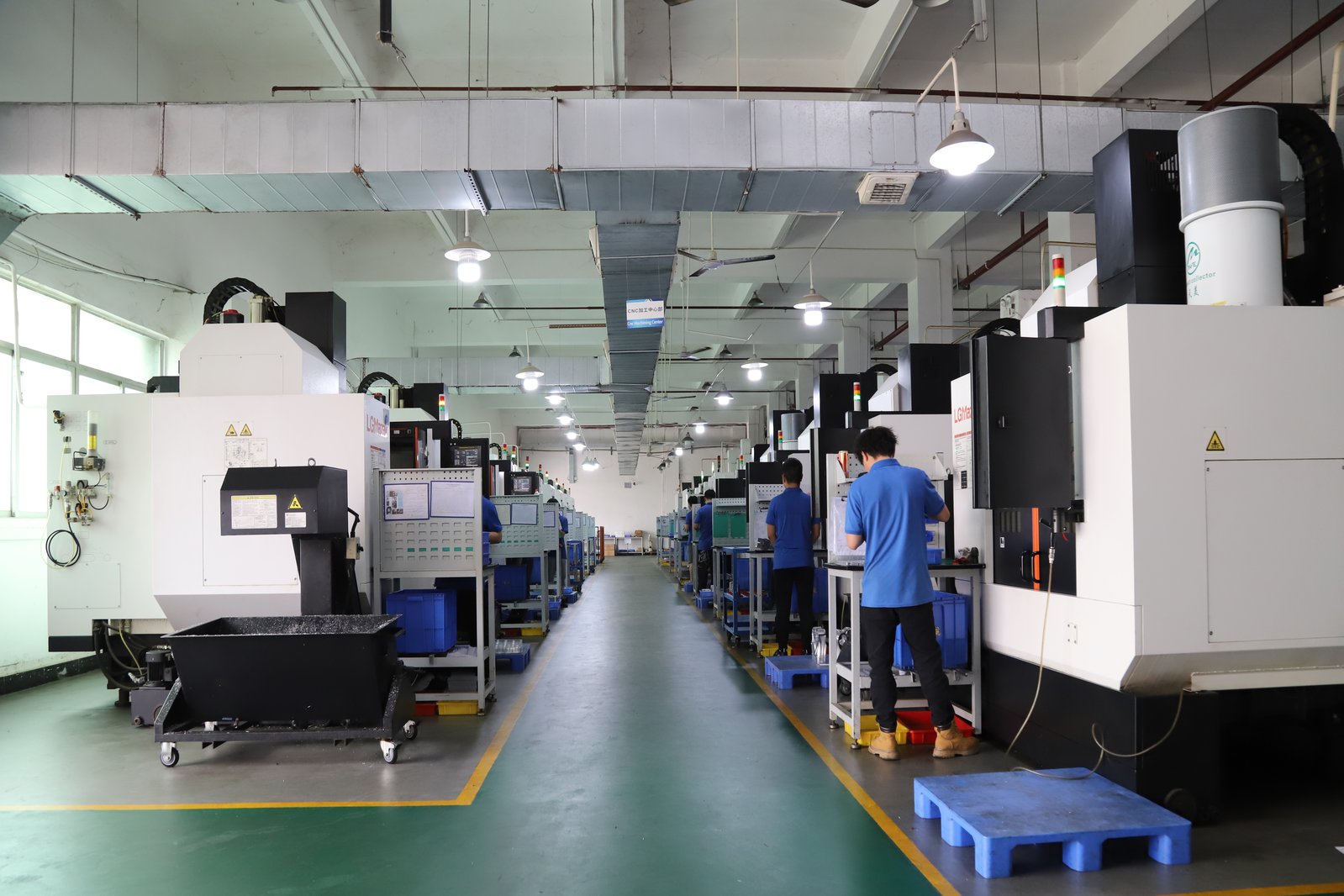
Metal parts from China are bought on evidence, not on adjectives, and the moment the evidence matters most is the moment before you pay. A deposit funds the work; the question is whether the supplier behind the quote has earned it. The risk concentrates in six verifiable places: the entity you will pay, the quality system behind the certificates, the material control that protects your parts, the structure of the quote you are approving, the payment terms that decide who carries the risk, and the inspection that gates the balance. Each gate can be run from your desk before the wire, and each one decides whether the money that moves is an investment or a gamble.
Why does verification belong before the payment, not after the parts?
Cross-border sourcing inverts the buyer's normal leverage. At home, a failed delivery is recovered by refusing payment or invoking warranty; from China, the correction loop is measured in weeks and the freight leg adds its own cost to any remedy. The buyer's leverage has to be rebuilt before the wire: it lives in the entity verification that tells you who you are actually paying, in the quality evidence that tells you the supplier can hold what it quotes, and in the payment structure that ties the balance to approved inspection results. Nothing about that is exotic — it is the same discipline a domestic buyer applies, held to a higher standard because the distance removes the easy remedies.
That discipline is cheap when it is early. Verifying the entity before the PO costs an hour; discovering the entity was wrong after a failed lot costs the lot, the freight, and the correction loop. Every gate in this guide is designed to run before money moves, which is exactly when a refusal to answer still costs nothing. A supplier that cannot produce the evidence before payment is a supplier whose evidence will not improve after it.
Gate one: is the entity you will pay the factory behind the quote?
The first gate answers the most common failure in China sourcing: paying a different entity than you think you are paying. Ask for the legal entity name, the business registration number, and the registered address, then compare them across the website, the quote, the invoice, and the bank details. A brand sitting on a registered company is normal — the brand is what you found, the company is what you pay — but the link must be explicit. If the paying entity cannot be tied to the brand you chose, the search ends there, before any money moves.
Then confirm the factory claim. Ask for the machine list with models and counts, request a live video walk-through of the floor, and confirm the machines run under the entity you will pay. Ask which machines would run your parts and which instruments would verify them. A real manufacturer answers all of that without hesitation; a broker defers every question to the factory. And check the banking detail before you wire: the account name must match the registered entity, because a payment to an account in a different name is the point at which the entity problem becomes a money problem.
Gate two: which quality claims verify, and which are decoration?
The second gate separates certificates that prove something from logos that prove nothing. Ask for ISO 9001:2015 as the quality baseline with its certificate number, and verify the number with the registrar; a genuine certificate resolves to its issuer and scope, while a logo alone is decoration. Ask what tolerance the supplier holds in normal production — the realistic answer is ±0.003 mm for milling and turning and ±0.002 mm for grinding, with process capability at Cpk 1.67 or higher on key characteristics and Cpk ≥ 1.33 on general characteristics. Capability is reported per characteristic: every report names the feature, its tolerance band, the sample size, the sigma method, and the study window., and ask how that is evidenced on shipped parts.
Ask for a sample dimensional report from a past lot and read it. Does the report show measured values against the drawing callouts, with the instrument named, or a column of pass marks? Ask what documents ship with a lot — material certificate, dimensional report, conformity statement — and which inspection is included in the quoted price. Ask how incoming material is verified against its certificate, because a substituted alloy passes every dimension and fails in service. The quality page on this site shows how one China machining floor structures its verification and reporting, which is a concrete benchmark for the evidence you request.
Gate three: does the quote describe the order or hide it?
The third gate reads the quote for structure. Ask every candidate to split the price into material, machining, setup, and inspection, and to state the drawing revision it priced, the tolerance it will hold on each critical characteristic, the incoterm, and the documentation that ships with the parts. A quote that separates those lines is pricing the order; a lump sum is hiding the inspection, the setup, or the material grade inside a number.
Read the incoterm as part of the structure, not as fine print. The importer of record usually pays duty at clearance, and freight and insurance sit with one side or the other depending on the terms, so every candidate must quote the same delivery scope or the comparison is between different products. If the shop says it holds ±0.003 mm and the quote carries no inspection line, the inspection is either hidden or will not happen. And read the quote for what it promises to ship: the material certificate, the dimensional report, the conformity statement. A quote that does not commit to the documents has not quoted the order you are actually placing.
Gate four: how is the payment structured so the risk stays on the right side?
The fourth gate reads the commercial terms as a signal of how the supplier expects the relationship to go. A deposit to start, with the balance tied to inspection results or shipment, keeps your leverage on your side across the distance — a supplier confident in its output will agree to a balance against an approved first article. Full prepayment from an unproven supplier is a risk you would be funding, and pressure to pay outside normal terms is a red flag regardless of how persuasive the sales conversation has been.
The order document is the second half of the gate. It should name the drawing revision and its issue date, the material grade and condition, the quantity, and the incoterm. Agree in writing what triggers a re-quote, typically any revision after the order is placed, and what the first-article approval step looks like — including the approval window, because a slow approval from your side delays the supplier's balance and the production schedule. Payment terms that concentrate all risk on the buyer are not negotiation starting points; they are findings.
Gate five: what does the first article prove before the balance moves?
The strongest single gate before volume payment is the first article. Order one part at MOQ 1, in the production material, machined with the full document set, and ship it by courier rather than folding it into a sea-freight batch. Measure the critical dimensions on your own equipment and compare them to the dimensional report. Match the certificate numbers to the lot and the grade to your callout. Confirm the report format is the format your quality system will use, so the first article becomes the production baseline rather than a separate artifact.
If the first article matches its paperwork, the supplier's system is real and the balance is a scaling decision, not a leap of faith. If it drifts, the lesson has cost one part and one courier shipment instead of a production lot. Tie the payment schedule to the gate: the deposit funds the first article, and the balance follows the approval. A supplier that resists that structure is telling you it would rather be paid for hope than for evidence.
Gate six: what does a pre-shipment inspection add before the final payment?
For a production lot large enough that a defect is expensive to fix after export, an independent pre-shipment inspection against the approved first article is the gate that protects the final payment. The inspector verifies the lot on the supplier's floor before it leaves: the critical dimensions against the first-article baseline, the surface finish, the material records, the quantity, and the packaging. The report is issued before shipment, which means the balance can be tied to a document that describes the actual lot rather than to a promise about it.
The inspection is only as good as its basis. The inspector needs the approved first-article report, the drawing revision, and the sampling plan to judge the lot against, which is why the first-article gate and the pre-shipment gate are designed to work in sequence rather than independently. A supplier that welcomes third-party inspection is confident in its output; one that resists it is telling you what an inspection would find. For the largest or most critical orders, some buyers use a third-party inspector for every lot; for most, the pre-shipment inspection on the first production lot is the gate that establishes the pattern the relationship follows.
Which red flags should stop the payment before it starts?
Some findings are terminal, and naming them saves more than any checklist. An entity that shifts between the quote and the invoice, or bank details in a name that does not match the registration, ends the sourcing. Payment to a personal account is not negotiable — it is a stop. Refusal to share certificate numbers, sample reports, or a video walk-through means the supplier cannot demonstrate what it claims. A quote that hides the setup or the inspection line, or an incoterm that keeps shifting between conversations, is hiding the cost. And a tolerance promise beyond realistic machining capability describes a process the supplier does not run.
When several red flags appear together, end the conversation cleanly and move to the next candidate. Keep the evidence you collected — the registration number, the certificate numbers, the quote with its structure and incoterm — filed against each candidate, because that file becomes the baseline for the receiving check when the first article arrives. The discipline of walking away from a bad candidate is what makes the good candidate's first article affordable.
How do you rank the candidates that clear all six gates?
When several candidates clear all six gates, rank them with a scorecard rather than a gut call. Score the entity verification and the certificate check as binary — any inconsistency ends the candidate. Score the quality evidence against your specific parts: a supplier with a sample report in your material and tolerance class outranks one with a longer machine list and no comparable work. Score the quote for structure and completeness, and score the commercial terms for balance — a deposit with the balance tied to an approved first article and a pre-shipment inspection is standard and fair. Add the soft signals from the exchange — response precision, whether technical questions were answered directly, whether the same contact stayed consistent — because those predict how the relationship will feel when a problem surfaces.
Sum the scores, take the top candidate to a first article, and keep the runner-up warm. The first article is where the ranking gets confirmed or corrected with a measured part, and the payment structure you agreed in gate four is what makes the ranking enforceable. The FAQs page covers the tolerances, materials, and order structures a China machining floor runs, the parts guide shows what a quoted part contains, and the contact page is where a specific drawing becomes a specific sourcing conversation with the six gates answered up front.
Keep the same discipline on repeat orders. The leverage you built for the first payment does not need rebuilding if you preserve it: the approved first article becomes the reference baseline, the report format stays the format your receiving inspection expects, and the payment structure — deposit, approved inspection, balance — stays the structure for the second order and the tenth. Re-run the gates on any material change, a new part family, or a new supplier, and file the evidence from every order against the supplier. The file is the memory that keeps the sourcing decision honest across time, and the discipline is what turns a single verified purchase into a dependable supply relationship.
Frequently Asked Questions
What should I verify before paying for metal parts from China?
Verify the entity you will pay against the registration, the certificates against their registrars, the quality evidence against a sample report, the quote against a complete specification, and the payment structure against the risk. Make the first article and the pre-shipment inspection the gates that release the balance.
How do I confirm a supplier is a factory and not a broker?
Match the legal entity across the registration, the quote, and the invoice, ask for the machine list and a live video walk-through, and confirm the paying entity runs the machines. A broker adds a margin and defers every technical question to the factory.
Which quality evidence should I request before paying?
ISO 9001:2015 with a verifiable certificate number, a sample dimensional report with measured values against callouts, and a material verification record tying a certificate to a real lot. Ask what tolerance the supplier holds — ±0.003 mm milling and turning, ±0.002 mm grinding, with capability at Cpk 1.67 or higher — and how it is evidenced.
What does a safe payment structure look like?
A deposit to start with the balance tied to inspection results or shipment keeps your leverage across the distance. Full prepayment from an unproven supplier is a risk you would be funding. A confident supplier will agree to a balance against an approved first article and a pre-shipment inspection.
Why does the incoterm matter when comparing China quotes?
Because the importer of record usually pays duty at clearance, and freight and insurance sit with one side or the other depending on the terms. Compare every quote on the same incoterm and include duty and freight in the landed cost, or you are comparing factory prices against delivered prices.
What is the strongest single gate before volume payment?
A first article with the full document set, shipped by courier, and measured on your own equipment against your drawing. For larger production lots, add an independent pre-shipment inspection against the approved first article before the balance is released.
Which red flags should stop me from paying?
An entity that shifts between the quote and the invoice, payment to an account in a different name, refusal to share certificate numbers or sample reports, and pressure to pay in full before any work. Any one of these ends the sourcing before money moves.
Running the six gates and want a supplier that answers them before you pay?
Send the drawing and your verification list to [email protected] or call +86 13126536955 — the registration, certificate numbers, sample reports, and quote structure are provided before any commitment.