
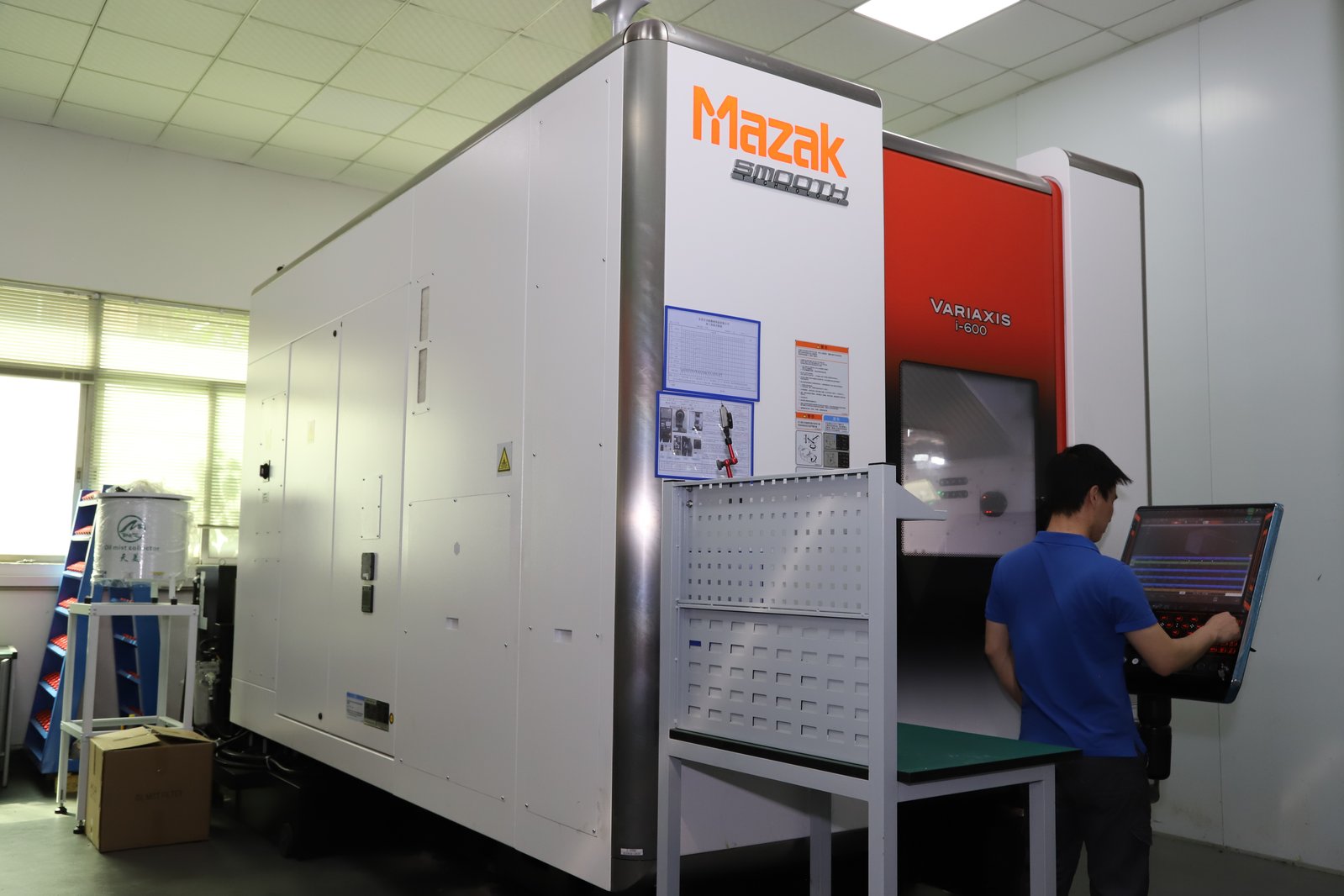
Every metal part has several ways to be made and several places to be made, and the right answer depends on volume, tolerance, material, and the calendar. Buying machined metal parts from China is a strong default for a wide band of work — prototypes through production, in aluminum, steel, brass, and titanium — but it is not the only answer. This guide works through the alternatives honestly: when local machining wins, when casting and forging are required rather than optional, when additive earns its place, and how to compare every route on the same total-cost basis before you commit.
What are the real alternatives when buying metal parts?
Line up the candidates so you are comparing real options rather than vague ones. Each route is good at something specific:
- China CNC machining cuts parts from certified bar or plate at lower machine-hour rates, with no tooling and a 1-piece minimum. It is the strongest default for low to mid volume and for tolerance-critical features.
- Local (US/EU) machining is the same subtractive process nearer to you — faster logistics, easier communication, higher hourly rates.
- Casting produces near-net shapes cheaply at volume but needs tooling, and critical surfaces still require machining.
- Forging aligns grain flow for strength and fatigue life, at the price of dies and a machining finish pass.
- 3D printing makes geometry that machining cannot, at low volume, with looser tolerance and higher per-part cost.
Notice the structural point: machining appears in every alternative's future. Castings and forgings are finish-machined; printed parts need their bores and seats machined; even a molded component usually starts life as a machined prototype. The real question is never "machining or not" — it is which process makes the bulk of the part, and how much machining you pay for afterward.
China machining vs local machining: the landed-cost math
Machining against machining, the process is identical; the difference is the cost and calendar structure. Chinese machine-hour rates tend to sit below US and Western European rates, which is the core of the sourcing advantage, but the honest comparison is landed total cost, not the unit price on the quote. Add freight, duty where it applies, the inventory you will hold because of the longer lead time, and the cost of managing a supplier on the other side of the world.
The saving survives the math when it is real: labor-heavy parts, mid-to-high volumes, and designs stable enough to tolerate the shipping leg. It shrinks or disappears on a single urgent part, where the freight and the wait can exceed the machining saving. The buyers who make China sourcing work treat it as a planned decision — parts that can absorb the lead time move to China; emergency parts stay local.
The comparison only works if both quotes carry the same scope: same material grade, tolerance, finishing, inspection documentation, and incoterm. A local quote and a China quote are different numbers for the same part only when both include the same work. Ask both suppliers for an itemized breakdown — material, machining, finishing, inspection, freight — and compare the totals, not the headline prices.
CNC machining vs casting: where volume moves the answer
Casting wins when the tooling cost — the die or pattern — is spread across enough parts. At low and medium volumes that fixed cost makes castings expensive per part, and machining from bar or plate has no tooling beyond fixturing, so the first part can run in days rather than weeks. A design change on a machined part costs a program edit; on a casting it costs a new die. That is why prototypes, low-volume production, and iterative development land on machining almost every time.
The crossover arrives at volume. Once the tooling amortizes across a large run, a near-net cast part uses less material and fewer spindle hours than the same geometry hogged out of solid stock, and the per-part price falls accordingly. For most small metal components the crossover commonly sits somewhere in the thousands to tens of thousands of parts; above it, casting plus a little finish machining can undercut fully machined parts.
The planning rule: price both routes at your real program quantity, with tooling amortization, secondary machining, finishing, and scrap included. Tooling-heavy processes quote seductive per-part numbers once the die is ignored; machining quotes honest numbers from part one. If the design is still moving, machining is the only route that does not punish you for the change.
When is forging required rather than an option?
Forging is not a cheaper way to make the same part — it is a different part. Hammering or pressing hot metal aligns the grain flow with the load paths, which raises strength and fatigue life in the directions the part is stressed. That is why suspension arms, landing-gear components, and safety-critical hardware are forged: the application demands forged properties, not just the shape.
If the part does not carry that load case, machining from bar or plate is simpler and cheaper. Wrought bar stock already has favorable grain orientation along its length, which suits most machined components. And a forged part is not finished at the forge: it still needs its holes, seats, and mating faces machined, so the forging decision adds an upstream cost rather than removing the machining step.
The buyer's question is therefore not "is forging cheaper?" but "does my part need forged grain flow?" If the answer is no — which it is for most machined parts — the forging quote is a solution to a problem you do not have. If the answer is yes, the forging supplier and the machining supplier both need qualification, and the finish-machining shop is usually the one that holds the tolerance.
When does 3D printing earn its place for metal parts?
Additive metal earns its place on geometry, not on cost. Internal cooling channels, organic lattices, and one-piece assemblies that cannot be machined are the justification — if the design exploits additive geometry, printing is not an alternative, it is the only route. The second, weaker justification is speed: one printed part can sometimes reach you faster than a machined one, when tolerance and material properties are secondary.
Against machining, printing loses on the measures that matter for production parts. Machined metal holds ±0.003 mm on milled and turned features and ±0.002 mm by precision grinding, with process capability of Ppk ≥ 1.67 at the initial study on key characteristics and Cpk ≥ 1.33 on general characteristics. Capability is reported per characteristic: every report names the feature, its tolerance band, the sample size, the sigma method, and the study window.; as-printed metal is looser, rougher, and typically needs machining on critical features anyway. Per-part cost barely falls with quantity, and the material certificate trail is less standard than machined stock from a mill.
The honest pattern for metal parts is print-plus-machine: print the near-net shape for its geometry, then machine the bores, seals, and mating faces. And once the design freezes and volume climbs, machining from bar usually undercuts the printed part on identical quality, which is why engineering teams keep a machining supplier in the loop even for designs that start as prints.
Which material families suit which route?
Material is the hidden variable in process selection, because not every alloy is equally available to every route. The families line up roughly as follows:
- Machining: wrought aluminum, carbon and alloy steels, stainless, brass, copper, titanium, and nickel alloys, all available as certified bar or plate — plus engineering plastics where a metal-like precision part is not required.
- Casting: the same base families in castable grades, at volume, with the caveat that cast microstructure has lower strength than wrought.
- Forging: carbon and alloy steels, stainless, and aluminum, where grain flow and fatigue matter.
- 3D printing: titanium, nickel alloys, aluminum, and stainless in powder form, for geometries that justify the process and the price.
Two rules keep the material decision honest. First, prototype and produce in the same alloy: a part prototyped in aluminum tells you nothing about its behavior in titanium. Second, match the stock form to the specification — a drawing that calls for wrought material with a mill certificate is inherently a machining (or forging) route, because that is where certified wrought stock is used. The material callout often decides the route before any pricing begins.
How do lead time, finishing, and documentation differ by route?
Routes differ in more than price, and the soft differences decide whether a route is even usable. Lead time to first article is shortest for machining — no tooling, days rather than weeks — and longest for casting and forging, where tooling comes first. A printed part is fastest to a rough shape and slower to a finished one once machining and post-processing are counted.
Finishing chains differ too. Machined aluminum parts commonly move to anodize; stainless to passivation or electropolish; steel to plating or coating. Castings and forgings need the same finishing plus any heat treatment, and their finish passes are often scheduled after the machining step. Every additional vendor step adds a queue and a risk point, so routes with more steps need more calendar and more qualification.
Documentation follows the material form. Machined parts from certified bar or plate carry mill certificates and CMM dimensional reports as standard; cast and forged parts add their own process certifications and material lots; printed parts have a thinner documentation standard today. If your industry needs material traceability, the route that starts from certified wrought stock is the route that gives it to you cleanly. That documentation architecture is described in the quality and inspection guide.
How do you choose the route and material for your metal part?
Run the decision in the same order every time, and the answer tends to reveal itself:
- What is the production material? Name the alloy and the specification. If it is a wrought grade with a certificate, machining or forging are the real candidates.
- What quantity will you actually buy? Low to mid volume points to machining; tooling-heavy routes need volume to amortize.
- Does the part need cast or forged properties? Grain-flow strength for safety-critical parts, or near-net material economy at high volume, or is wrought bar sufficient?
- Does the geometry require additive? Internal channels and lattices that cannot be machined justify printing; everything else can be machined.
- Where should the part be made? Run the landed-cost and calendar math for China versus local at your real volume.
| Your situation | Best route | Why |
|---|---|---|
| Prototype or low volume, wrought alloy | China or local CNC machining | No tooling, certified stock, print tolerance |
| Mid-volume production, stable design | China CNC machining | Hourly-rate saving survives freight at volume |
| One urgent part, this week | Local machining | Freight and wait erase the China saving |
| Thousands of parts, near-net economy | Casting plus finish machining | Tooling amortizes, material cost falls |
| Safety-critical, fatigue-loaded part | Forging plus finish machining | Grain flow raises strength and fatigue life |
| Internal channels or lattice geometry | 3D printing plus machining | Only additive makes the shape; machining restores tolerance |
Machining appears in most rows — as the whole answer or the finishing step — because machined accuracy is the common denominator of metal part manufacturing. When machining is your route, the supplier choice is next, and the China supplier selection guide runs that screen in thirty minutes. The services and materials available from a multi-axis China machining shop are on the services overview.
Frequently Asked Questions
When is machining metal parts in China cheaper than machining locally?
Compare landed total, not unit price: machining cost plus freight, duty, inventory, and the longer logistics leg. Chinese machine-hour rates tend to run below US and Western European rates, and for labor-heavy parts at mid-to-high volume the saving usually survives the freight math. For a single urgent part, the freight and wait can erase it.
At what volume does casting beat machining?
There is no universal crossover — it depends on part size, material, and tooling complexity — but for small metal components it commonly sits in the thousands to tens of thousands of parts. Below that, machining from bar or plate is usually competitive; above it, castings with a little finish machining can undercut fully machined parts. Price both at your real volume, tooling included.
When is forging required rather than an option?
When the application demands forged properties — the improved grain flow, strength, and fatigue life that safety-critical parts like suspension and landing components need. If the part does not carry that load case, machining from bar or plate is simpler and cheaper. A forged part still needs finish machining on its holes and mating faces.
Should my metal part be 3D printed?
Only when the geometry justifies it — internal channels, lattices, or parts that cannot be machined — or when you need one part faster than machining and tolerance is secondary. Machined metal holds ±0.003 mm on milled and turned features, ±0.002 mm by grinding, with Ppk ≥ 1.67 at the initial study on key characteristics and Cpk ≥ 1.33 on general characteristics. Capability is reported per characteristic: every report names the feature, its tolerance band, the sample size, the sigma method, and the study window.; printed metal needs machining on critical surfaces and usually costs more per part.
Which material families suit which process?
Wrought aluminum, steel, brass, and copper are the natural materials for machining, and casting brings the same families to near-net shapes at volume. Forged parts concentrate on carbon and alloy steels, stainless, and aluminum where grain flow matters. Machining is the common denominator — cast, forged, and printed parts all need machined critical features.
How do I compare quotes across different manufacturing routes?
Build every comparison on the same lines: unit material, unit conversion, one-time tooling, finishing and secondary operations, and freight. Then add lead time to first article, revision cost, and minimum quantity. Most route comparisons fail because one quote includes finishing and inspection while the other does not — same scope or no comparison.
Is a hybrid route — machine plus cast or print — ever the smart answer?
Often. Print or cast the near-net shape to save material or enable geometry, then machine the bores, seats, and mating faces to tolerance. It is standard practice on engine and structural parts. The risk is managing two suppliers, so a factory that machines well can tell you honestly which features of a cast or printed part must be cut.
What does total cost include beyond the unit price?
Freight and duty, inventory carried because of minimums and lead time, expected rejects multiplied by the cost of handling one defect, inspection work shifted onto your team when documents are missing, and the cost of a supplier failure. A higher unit price with near-zero rejects and shorter freight often wins that model.
Not sure which route fits your part?
Send the STEP or IGES model, the material callout, and the target quantity to [email protected] or call +86 13126536955. You will get an honest recommendation — including when machining is not the right answer.